
Hebrew version below – הגרסה העברית מופיעה לאחר הטקסט באנגלית
The White Papers and the Jewish Right to the Land of Israel
In 1917, the British government issued the Balfour Declaration, expressing its support for the establishment of a “national home for the Jewish people in Palestine.” This declaration was granted binding international status by the San Remo Conference (1920) and ratified by the League of Nations (1922). The Mandate for Palestine affirmed that the land of Palestine belongs to the Jewish people and assigned Britain the responsibility to help implement this right. This was not a gesture of goodwill – it was a recognized legal right of the Jewish people to their historic homeland.
The Western powers acknowledged that "Palestine" is, in fact, the Land of Israel.
At that time, no sovereign Arab state or national Arab entity existed in the territory of Palestine – neither historically nor presently. The Arab population lived under tribal and clan structures without national sovereignty. In contrast, the Jewish people returned to their homeland and established clear national institutions under the name “Palestine” – a Western term internationally recognized as referring to the Land of Israel, not to any Arab nation.
Jewish institutions operated under the name Palestine: the Anglo-Palestine Bank, the Palestine Symphony Orchestra, the Hebrew University, and Jewish sports teams representing “Palestine” in international competitions. All of these reflected one truth: “Palestine” meant the Land of Israel – the homeland of the Jewish people.
The Three White Papers – A Gradual Betrayal of an International Commitment
The 1922 White Paper (Churchill):
-
Removed Transjordan from the territory designated for the Jewish national home, eliminating 78% of the Mandate’s original area.
-
Restricted Jewish immigration based on “economic absorptive capacity,” giving British officials the power to block immigration arbitrarily.
-
Stated that not all of Palestine would become a Jewish homeland – a deviation from the original Mandate.
This marked the first public retreat by Britain from its commitment to the Jewish people.
The 1930 White Paper (Passfield):
-
Severely limited Jewish land purchases, especially in agricultural areas.
-
Ended direct support for Jewish settlement and called for further immigration restrictions.
-
Proposed the creation of a legislative council with an Arab majority, effectively blocking Zionist goals.
Following intense Zionist pressure, Churchill issued a partial clarification that reversed some measures.
The 1939 White Paper (MacDonald):
-
Set a five-year immigration cap of 75,000 Jews, after which any further immigration required Arab approval.
-
Prohibited Jewish land purchases in 95% of western Palestine.
-
Revoked the commitment to a Jewish national home and proposed a binational future state.
This paper was issued on the eve of World War II – effectively closing the gates of the Land of Israel to Jews fleeing the Holocaust.
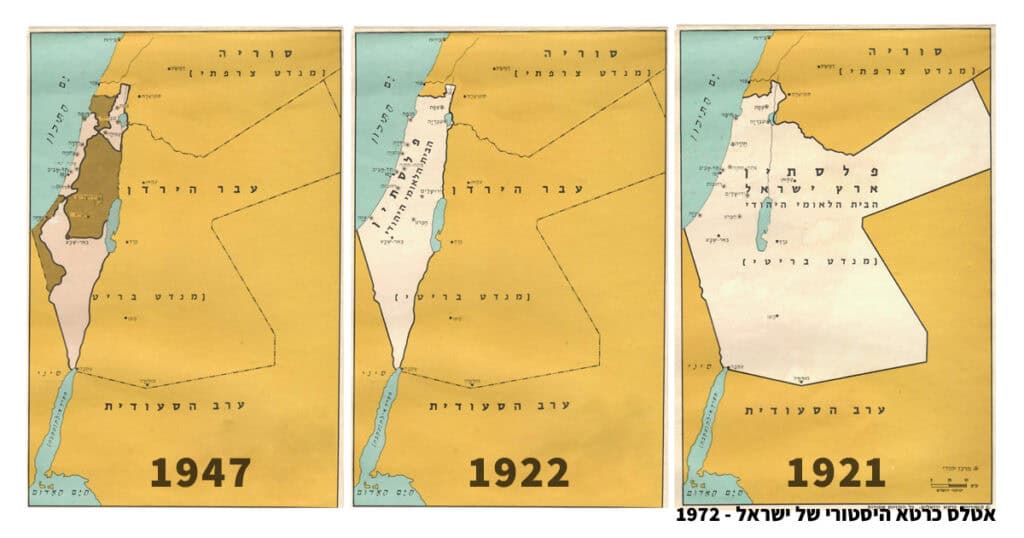
Maps Illustrating Britain’s Step-by-Step Retreat
-
1921 Map: Historic Palestine, including Transjordan, fully designated as the Jewish National Home.
-
1922 Map: Transjordan administratively separated from the Mandate area (as detailed in the Mandate’s appendix).
-
1947 Map: The UN Partition Plan – a complete dismantling of the original promise.
The White Papers – Root of the Conflict
The White Papers were not merely a technical breach of Britain's promise – they created a dangerous and lasting reality. Instead of fulfilling the international agreement to establish a Jewish state in the Land of Israel, Britain chose to yield to political and violent Arab pressure. This opened the door to Arab radicalization and long-term hostility.
As a result, a tragic situation arose: Jews persecuted by the Nazis were prevented from entering their homeland – the Land of Israel – while Arab migrant workers and communities from outside the country continued to flow in freely. This distorted the demographic balance of the land designated for the Jewish national home and undermined the very purpose of the British Mandate.
Britain not only blocked Jewish entry – it deported refugees, closed the gates of the land with force, and caused the death of hundreds. The most shocking example was the sinking of the refugee ship Struma in the Black Sea (February 24, 1942), with 769 Jewish passengers on board. Only one survived. Britain also sank the Patria in 1940. These tragedies embodied the peak of British betrayal: not only was the promise of a national home broken – it actively prevented the rescue of Jews during the Holocaust.
A Hundred-Year War
From this point began a century-long struggle: between the Jewish people – whose right to the land was recognized historically, legally, and internationally – and the Arab world, which has persistently sought to expel the Jewish minority from the Middle East and from the Land of Israel in particular. The conflict is not about borders – it is about the Jewish people’s very right to sovereignty in their homeland.
The rise in European antisemitism did not accelerate the fulfillment of the British promise – it did the opposite. It led to the White Papers, reinforced opposition to a Jewish state, and sowed the seeds of global denial of Jewish rights to Israel. Therefore, any discussion of peace must begin by addressing this root: a historical, legal, and moral failure by the Western powers toward the Jewish people.
We Have a Right, a Commitment, and the Truth
Most Western powers recognized Palestine as the Land of Israel – the historic homeland of the Jewish people. Britain was entrusted with a mandate to fulfill this promise – but instead, it gradually withdrew and surrendered to Arab violence and pressure. The White Papers are a record of moral, historical, and legal betrayal. They do not negate the Jewish right – they emphasize our responsibility to uphold it.
Palestine is the Land of Israel. It was never a sovereign Arab state. Presenting it as such is a distortion of history. This land is the homeland of one people – the Jewish people.
הבגידה הבריטית בזכות היהודית על ארץ ישראל
בשנת 1917, בהצהרת בלפור, הכריזה ממשלת בריטניה על תמיכתה בהקמת "בית לאומי לעם היהודי בפלשתינה". הצהרה זו קיבלה תוקף בינלאומי מחייב בהחלטות ועידת סן רמו (1920) ובאישור חבר הלאומים (1922), שבכתב המנדט נקבע כי פלשתינה שייכת לעם היהודי, ולבריטניה ניתנה האחריות לסייע ביישום הזכות הזו. מדובר בזכות משפטית – לא במחווה בריטית ולא בנדיבות של העולם – אלא בזכות מוכרת של העם היהודי על מולדתו ההיסטורית.
מעצמות המערב הכירו בכך שפלשתינה היא ארץ ישראל.
באותם ימים לא התקיימה שום ישות מדינית או ריבונית ערבית בשטחי פלשתינה – לא בעבר ולא בהווה. האוכלוסייה הערבית באזור חייתה במסגרת שבטים וחמולות, ללא ריבונות לאומית. לעומתם, העם היהודי שב אל מולדתו וכונן מוסדות לאומיים ברורים תחת השם "פלשתינה" – מונח מערבי הידוע לקהילה הבינלאומית כמזוהה עם ארץ ישראל, ולא עם שום מדינה ערבית.
המוסדות היהודיים פעלו תחת השם פלשתינה: הבנק הלאומי (Anglo‑Palestine Bank), התזמורת הפילהרמונית (Palestine Symphony), האוניברסיטה העברית, ואפילו נבחרות ספורט ייצגו את "פלשתינה" היהודית בתחרויות בינלאומיות. כל אלה ביטאו את אותה הבנה: פלשתינה היא ארץ ישראל, של העם היהודי.
שלושת הספרים הלבנים – שלבים בהפרת ההתחייבות הבינלאומית
הספר הלבן של 1922 (צ'רצ'יל):
-
צמצם את תחולת המנדט והוציא את עבר הירדן משטח פלשתינה היהודית – ובכך ביטל 78% מהשטח שיועד לבית הלאומי.
-
קבע שהעלייה יהודית תוגבל לפי "יכולת הקליטה הכלכלית" – מהלך שבפועל אפשר לפקידים בריטיים לעצור עליות.
-
הדגיש שהמטרה אינה להפוך את כל פלשתינה לבית יהודי – בניגוד למנדט המקורי.
-
הייתה זו הפעם הראשונה שבריטניה נסוגה פומבית מהתחייבותה כלפי העם היהודי.
הספר הלבן של 1930 (פאספילד):
-
הוגבלו רכישות הקרקע על ידי יהודים – במיוחד באזורים חקלאיים.
-
בוטלה התמיכה הישירה בהתיישבות יהודית, ונדרשה הגבלת עלייה נוספת.
-
תוקם "מועצה מחוקקת" עם רוב ערבי – שמנעה קידום החלטות ציוניות.
-
בעקבות לחץ ציוני כבד, צ'רצ'יל פרסם הבהרה חלקית שביטל חלק מהצעדים.
הספר הלבן של 1939 (מקדונלד):
-
נקבעה תקרת עלייה של 75,000 יהודים לחמש שנים, ולאחר מכן – כל עלייה תותנה בהסכמת הערבים.
-
נאסר על יהודים לרכוש קרקעות ב-95% משטח פלשתינה המערבית.
-
בוטלה ההתחייבות לבית לאומי – ונקבע שהמדינה העתידית תהיה דו-לאומית.
-
הספר פורסם ערב מלחמת העולם השנייה – ובכך סגר את שערי הארץ לשארית הפליטה היהודית.
תוצאות הספרים הלבנים – שורש הסכסוך הארוך
הספרים הלבנים לא היו רק הפרה טכנית של ההתחייבות הבריטית – הם יצרו מציאות חדשה ומסוכנת. במקום לממש את ההסכמה הבינלאומית להקים מדינה יהודית בפלשתינה־ארץ ישראל, בריטניה בחרה להיענות ללחצים פוליטיים ואלימים – ובכך פתחה את הדלת להקצנה ערבית ולאיבה ממושכת.
בעקבות ההגבלות נוצר מצב אבסורדי: יהודים נרדפים על ידי הגרמנים באירופה נמנעו מלהיכנס לארצם – פלשתינה־ארץ ישראל, בעוד שמהגרי עבודה וקהילות ערביות מחוץ לארץ ישראל המשיכו לזרום פנימה. בכך השתנתה הדמוגרפיה של השטח שיועד לבית הלאומי היהודי, והוחל תהליך של יצירת רוב ערבי – היפוכה של מימוש הזכות היהודית ושל ההתחייבות המקורית של המנדט הבריטי.
בעקבות מדיניות זו, לא רק שנמנעה כניסת יהודים נרדפים לארצם – בריטניה אף גירשה פליטים, סגרה את שערי הארץ בכוח, ואף הטביעה את אוניית הפליטים "סטרומה" בים השחור (24 בפברואר 1942), כשעל סיפונה 769 פליטים יהודים – וכולם, פרט לניצול אחד, טבעו למוות. האירועים הללו סימלו את שיא הבגידה הבריטית: לא רק הופרה ההתחייבות להקים בית לאומי – אלא גם נמנעה בפועל הצלת חיי יהודים בשואה.
מלחמה של מאה שנים
מכאן החלה מלחמה ארוכה: בין העם היהודי – שהזכות שלו על הארץ הוכרה היסטורית, משפטית ובינלאומית – לבין הערבים, שניסו ומנסים להוציא את המיעוט היהודי מהמזרח התיכון בכלל, ומשטחי פלשתינה־ארץ ישראל בפרט. הסכסוך איננו על גבול – אלא על עצם הרעיון שהיהודים ינהלו ריבונות במולדתם.
התגברות האנטישמיות באירופה לא האיצה את קיום ההבטחה – אלא להפך: היא הולידה את הספרים הלבנים, חיזקה את ההתנגדות למדינה יהודית, וזרעה את יסודות ההתכחשות העולמית לזכות היהודית על ארץ ישראל. לכן, כל דיון על סיום הסכסוך חייב להתחיל בזיהוי שורשיו: כשל מוסרי, משפטי והיסטורי של מעצמות המערב כלפי העם היהודי.
יש לנו זכות, יש לנו התחייבות, ויש לנו אמת
מרבית מעצמות המערב הכירו בפלשתינה כארץ ישראל – מולדתו של העם היהודי. הבריטים קיבלו מנדט כדי להגשים את ההבטחה הזו – ובמקום זאת נסוגו ממנה בהדרגה ונכנעו לאלימות וללחץ ערבי. הספרים הלבנים הם תיעוד של בגידה מוסרית, היסטורית ומשפטית. הם אינם מבטלים את הזכות – אלא מאירים את גודל האחריות שלנו לשמור עליה.
פלשתינה היא ארץ ישראל. היא לא הייתה מעולם מדינה ערבית ריבונית – והצגתה כך היא עיוות היסטורי מובהק. זו מולדתו של עם אחד בלבד – העם היהודי.